
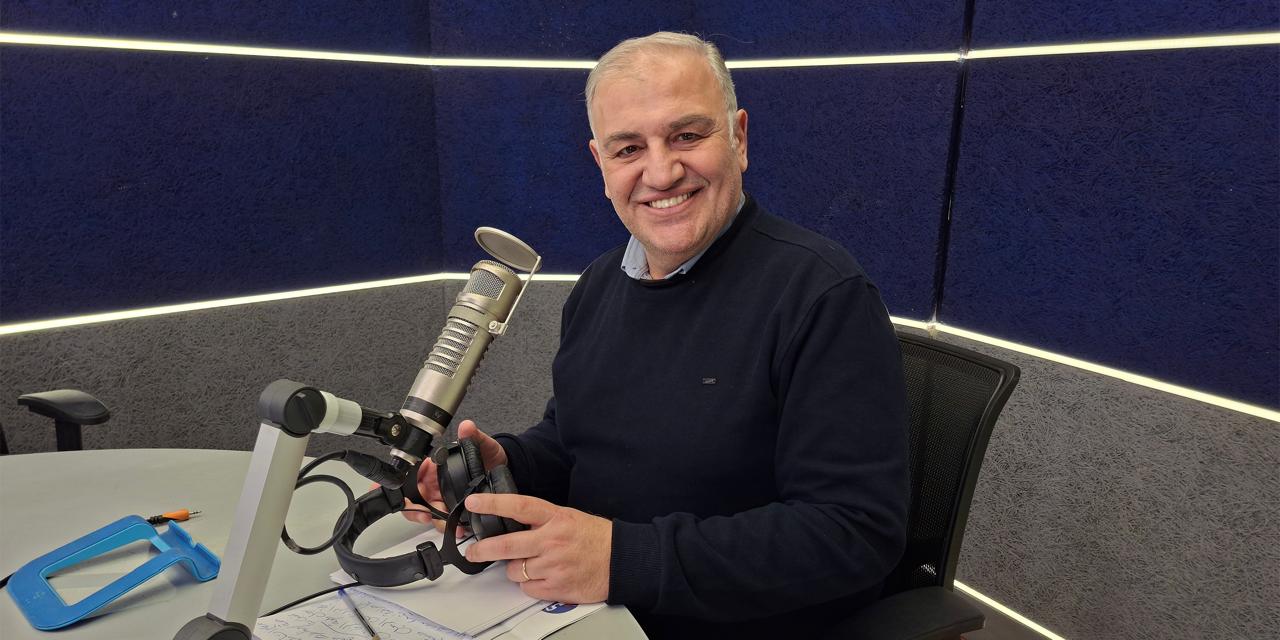
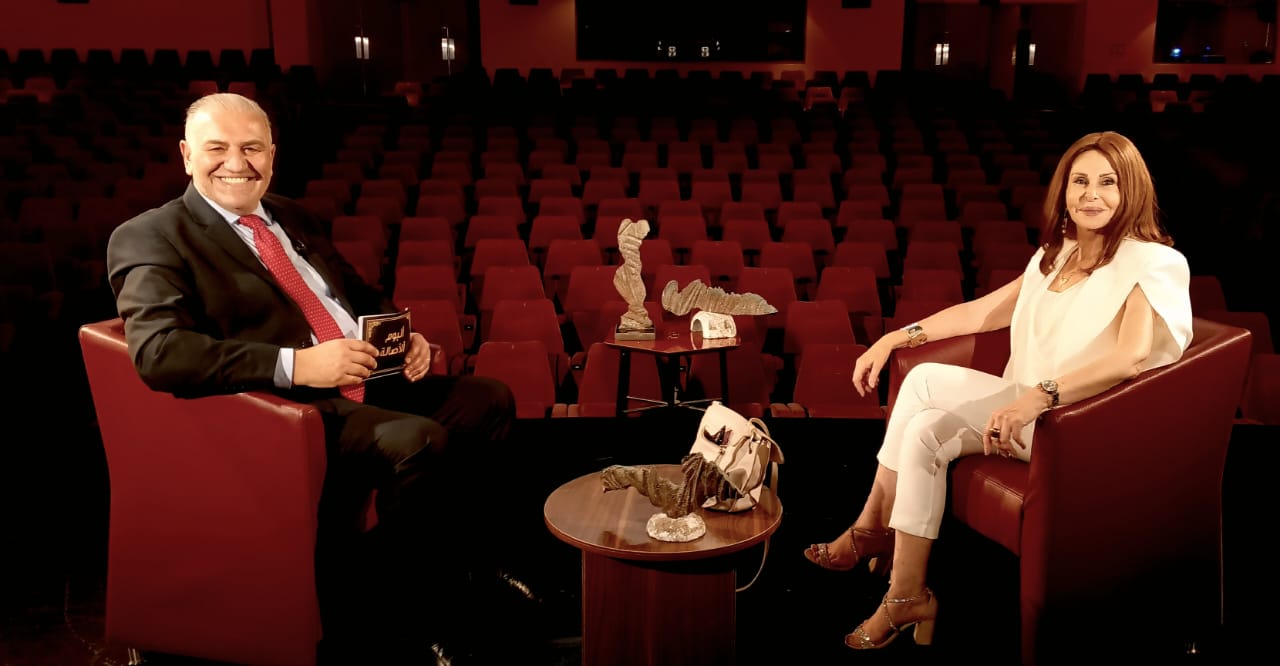
He entered the world of media at a very young age and, for 37 years, has continued to excel across print, radio, and television. This is to say nothing of his numerous publications, including his latest book, Bil Fan Khoud Chmelak. Currently, he hosts his show Album Al Assala on Télé Liban, while continuing his program Dayf el Dayf on Sawt El Ghad radio—a staple for the past 25 years
With over six thousand interviews to his name, he has earned the trust and respect of the greatest stars—a rare feat in this profession.
Prestige sat down with Robert Frangieh to hear the story of his adventures and his enduring success.

1. Robert Frangieh, what was your childhood like? What kind of boy were you, and what did you dream of?
My childhood took place in the city of Zgharta. I was a student at the Carmelites School in Tripoli before the outbreak of the war, and later at the Majdlaya branch. I wasn’t a turbulent child, and I wasn’t attracted to rough games. At school, I excelled in literary subjects; I was passionate about Arabic composition, but I was in a permanent conflict with arithmetic and mathematics.
2. Who influenced you most in your early days? In what field did you first start working?
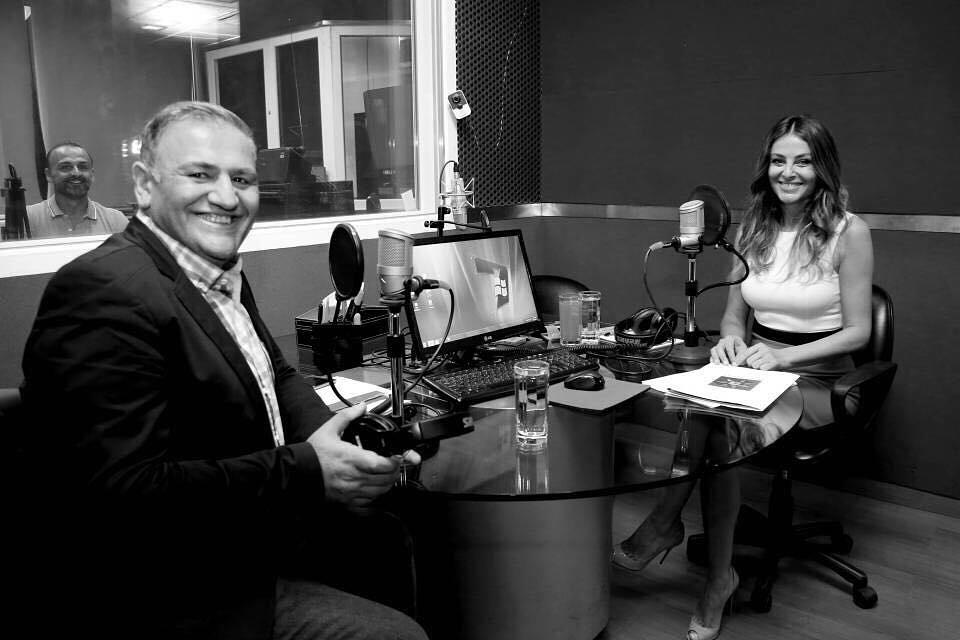
In 1978, a general-interest political radio station called “Radio Free Unified Lebanon” was founded in Zgharta, very close to my home. While the neighborhood children played ball, I frequented the station from the age of ten to help out, offer my services, or participate in children’s programs. Seven years later, while in my final year of high school (Terminale), I officially became a presenter at the station. I hosted shows that gained great fame in the North, such as Entre Parenthèses (In Parentheses), Voix (Voices), and Le Magazine du Nord.
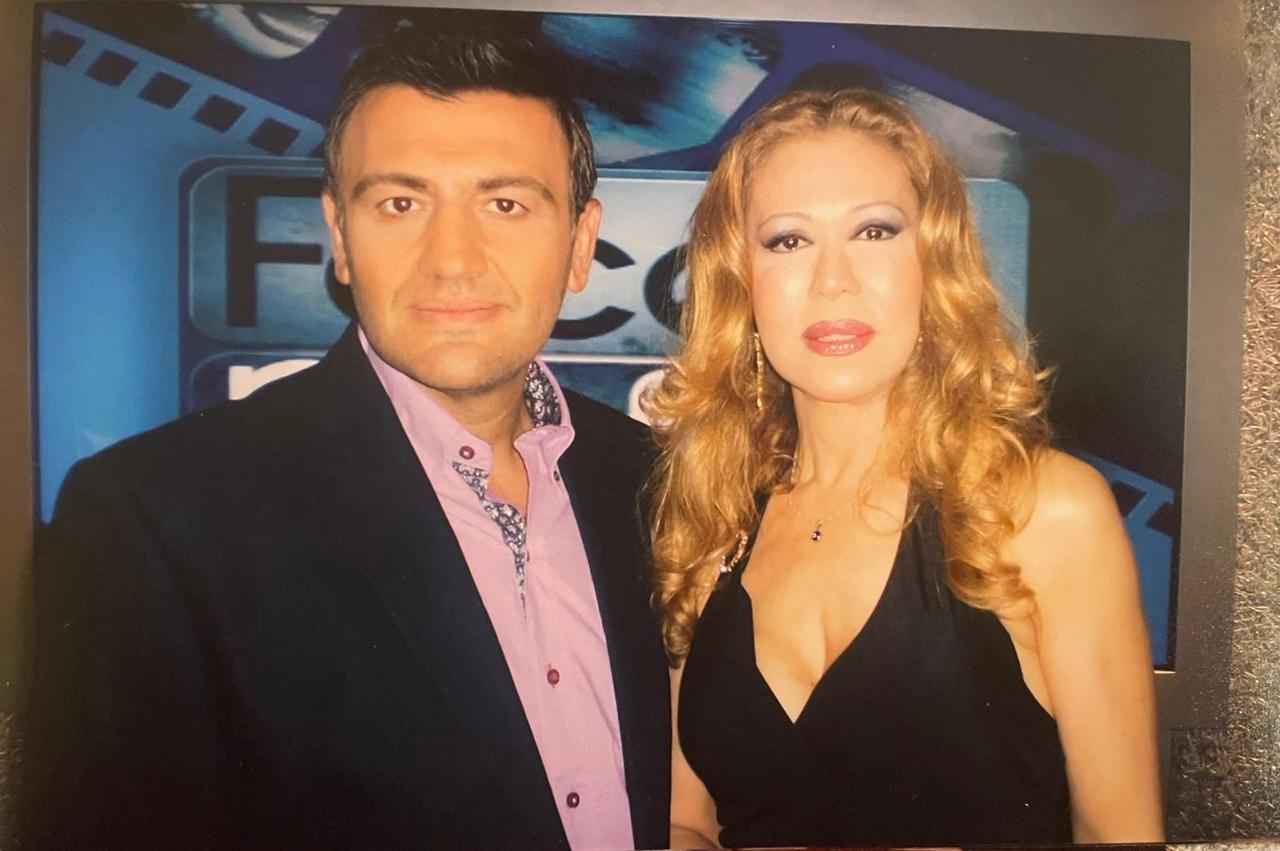
As I mentioned, my entry into radio wasn’t an accident, but a planned project. The radio was both my toy and my playground. Even at a very young age, I was on the AM airwaves interviewing major stars while taking live calls from listeners for competitions. I realized my first dream before I turned 18. I remember interviewing the artist Ronza just one month after my debut; she visited us late when my more experienced seniors were absent. I also remember that my first salary, in 1987, was 2,500 Lebanese pounds.

3. Tell us a pleasant anecdote from your beginnings:
I was quite a local figure at the Lebanese University (Third Branch). At the time, “Radio Free Unified Lebanon” was the only station in the North broadcasting on the AM band. One day, I hosted the great musician Melhem Barakat, who gave me the exclusive rights to his new song, Ma Yihminich. He asked me to interject with my voice in the middle of the track to prevent it from being pirated.
I promised him I would, and during every broadcast, I repeated the name of the station, adding: “As a reminder, recording is forbidden.
Time passed and the song became a hit. One day, as I was rushing into the university, I heard the track playing from a taxi’s radio. I wondered how he had obtained the title, but the sudden interruption of my own voice cut my questions short. Smiling,
I asked the driver, “Where did you get this song?” He replied with irritation: “I recorded it from such-and-such radio station, but that presenter—” and here, he profusely insulted me and my family— “didn’t give us a second of peace with his ‘As a reminder, recording is forbidden!

4. How did you come to work in the written press?
It didn’t take long for me to take my first steps in the Lebanese press. Only a few months after my radio debut, I began attending theaters and book signings.
I wrote a series of articles on several plays, notably Assda’ by Caracalla, Saif 840 by Mansour Rahbani, as well as performances by the Al-Nouaymi troupe in the North. I then sent my texts to the cultural section of the newspaper Al-Anwar.
How did I get them there? I would take a taxi from Zgharta down to Tripoli, where the Al-Anwar office for the North was located. I would drop my articles in a wooden mailbox at the entrance before the offices opened so the manager wouldn’t discover I was just a teenager.
The editor-in-chief of the cultural page, the late poet Riad Fakhouri, published my texts with beautiful photos and catchy headlines. When he was later a guest on our radio show, he exclaimed upon seeing me: “So it’s you, Robert! We thought you were in your forties.”
I remained an employee at the Dar Al Sayad publishing house for a quarter of a century, contributing numerous articles and reports to Al-Anwar, Al-Chabaka, and Al-Sayad.

5. And when did you start in television? Who offered you your first show?
The television experience began slowly with a few filmed reports for “Ehden TV,” such as coverage of the play Summer 840 at the Tripoli cultural center, or an outdoor interview with artist Marcel Khalifé during a concert in Tripoli.
However, the real launch was on “Tripoli TV” in the 90s, a channel affiliated with the late President Omar Karami. I first presented the show Al-Maw’id, where I interviewed greats like Wadih El Safi, Sabah, Samira Taoufik, and Najah Salam in their homes. Later, I hosted Zahar ya Sayf, where I accompanied artists to tourist and archaeological sites for filming. We took the late poet Maha Bayrakdar to the Lion’s Tower, Madona to the Citadel of Tripoli, the poet Maroun Karam to the Citadel of Barbar Agha, the poet Henri Zoghaib to the heights of Bchennata, and the artist Sami Hawat to Midane Square in Ehden. The show ended when the channel stopped broadcasting following the disappearance of regional media after the enactment of the audiovisual organization law in post-Taif Accord Lebanon.

6. Which program is closest to your heart?
Many interviews remain engraved in my memory, but my heart treasures three interviews conducted at a rate of one per year with the great artist Mansour Rahbani. He personally wrote the preface to my book on expatriation titled Plante-moi dans la terre du Liban (Plant Me in the Soil of Lebanon). Those interviews were published in the Sunday supplement of Al-Anwar. How could I forget his voice on the phone congratulating me on my professionalism and calling me a “media bridge between the past and the present”?

7. Between print, radio, and TV, you have met many famous personalities; which one marked you the most? Do you have an anecdote with a celebrity?
There are many situations and paradoxes I remember. For example, early in my career, I recorded an interview with the late, great artist Sayed Mekawy in his room at the Belmont Hotel in Ehden. Although he was visually impaired, he perceived my every move. When I flipped the cassette from Side A to Side B, he asked me, “Is there a problem with the cassette?” When I took a photo of him, he told me, “I don’t think it’s good, take a second one.” I remember leaving that interview wondering: is he truly blind, or is he hiding the light of his eyes behind his glasses?

8. In your latest book, In Art, Look to Your North, there are over 100 actors and actresses from the North. How did you build these friendships? Tell us about a conflict you had with a celebrity and how you resolved it.
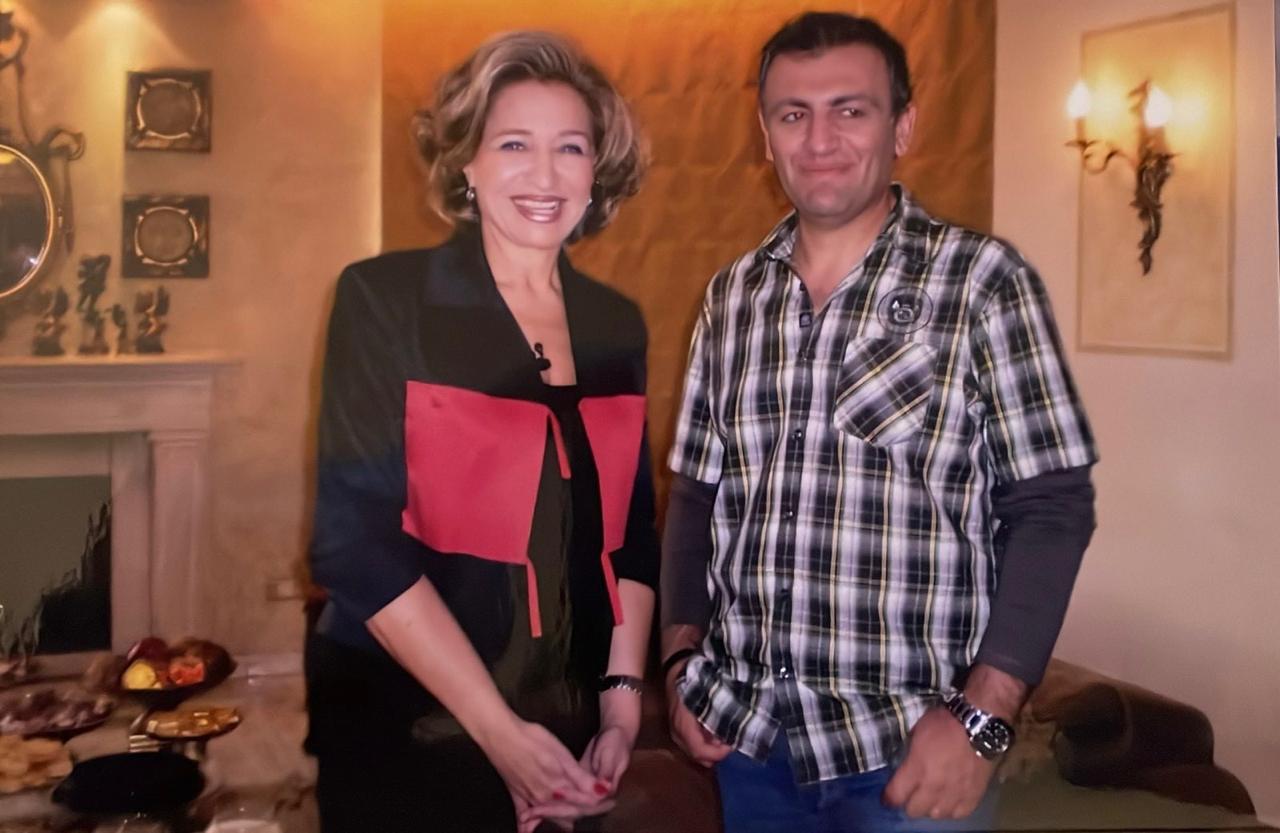
I built my friendships on the trust that celebrities felt over my 37-year career. I knew how to distinguish between what was publishable and what should remain confidential. What I know and have kept to myself far outweighs what I have written and published. For example, I knew the great artist Ahmed Kaabour was battling illness a year before the news broke; I had invited him for an episode of Album of Authenticity and he confided in me, but I chose not to speak of it until it became public recently. This trust opened the doors of their homes to me.
There are many incidents, some funny. I remember presenting a show on the OTV channel where I hosted an actor and a singer. I had invited actress Roula Hamadeh and singer Brigitte Yaghi. The director asked to replace Brigitte with Aida Chalhoub (as she is an actress-singer) to save Brigitte for an episode with actor Antoine Kerbaje. The executive producer forgot to apologize to Brigitte, who had taken time off work and arrived at the studio in full elegance. As soon as I saw her, I began to sweat and apologized tactfully. Brigitte murmured modestly, “This has never happened to me.” She showed great elegance of spirit, did not leak the matter to the media, and did not attack me, which made me eternally grateful to her.

9. You are known for wanting to unite and never divide. Does this come from your upbringing or your character? Who was your role model in the family?
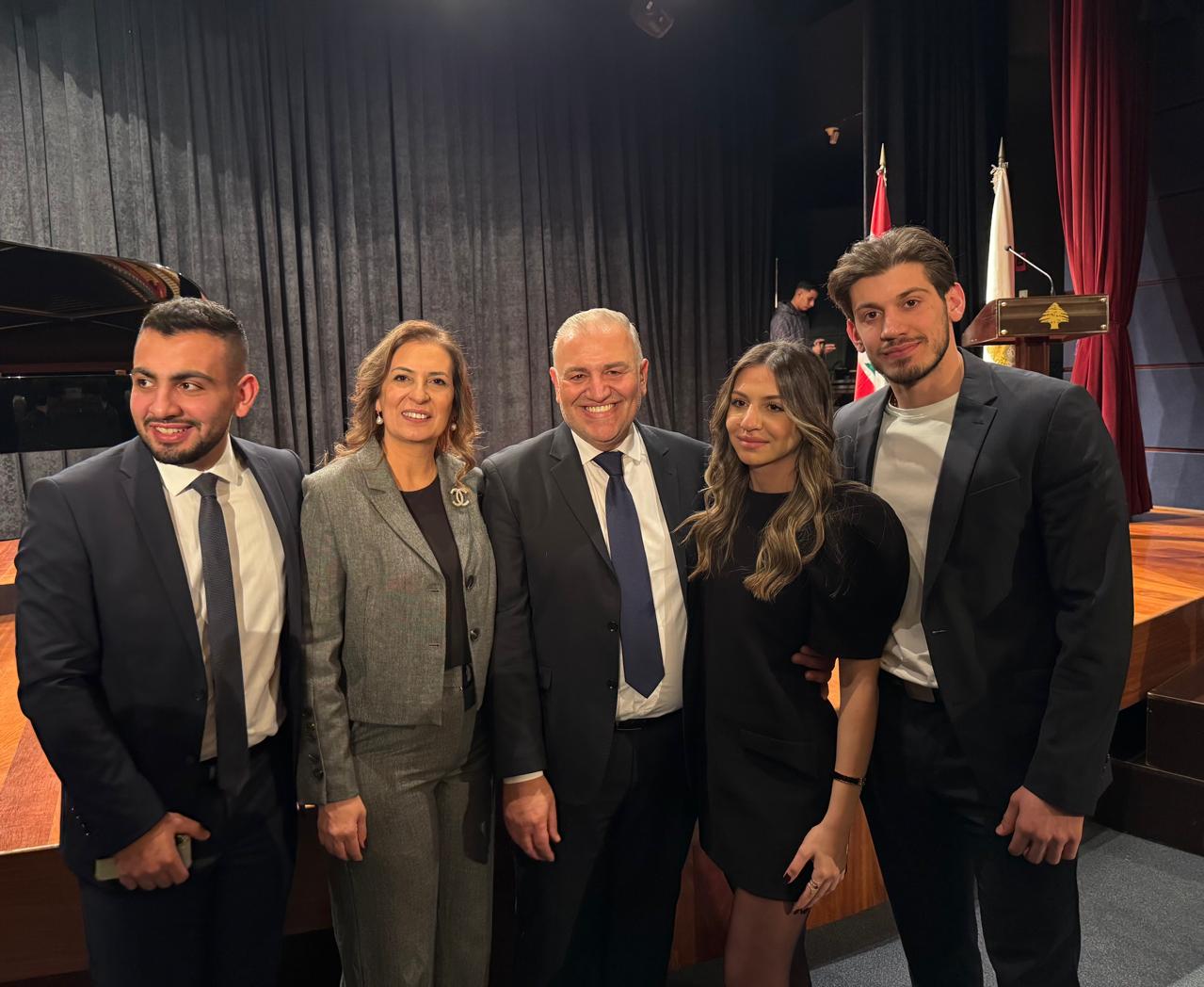
I thank God for belonging to this school of journalism. There is no doubt that education, upbringing, and temperament are the causes. Without wanting to repeat myself, I believe credit goes to the conciliatory woman, endowed with flexibility, diplomacy, calm, and balance. Here, my mother Olga and my wife Nouha share the responsibility of having transmitted these qualities to the home, and then to my personality, so that we can enjoy this beautiful positive energy together as a family.
10. To whom have you done a favor only for them to be ungrateful later? How do you feel about ingratitude?
Like all sectors, the artistic world knows cases of injustice, lack of loyalty, and opportunism. A certain category of artists deals with the press as if their interests come before everything else; for them, the end justifies the means to invade all media. I won’t deny feeling a lack of loyalty during my career: if I am absent from the screen, their calls stop; if I stop writing, their friendship and sincerity evaporate; and if a magazine stops publishing, they rebel against it and its writers. At first, we fell into the trap of deception and flattery, but with time, we developed an immunity to it.

11. You succeeded in print, radio, and TV, but you were also an actor? Tell us about this experience.
It was indeed a striking experience because I did not present myself as a professional actor, but rather took on the status of a “special appearance.” These were notable experiences: at the request of Syrian director Basil Al-Khatib, I played the role of the Israeli ambassador in the series Al-Ghaliboun, which was a challenge given the darkness of the character. It was the opposite of my role as a doctor in When the Earth Weeps, the lawyer in The Third Vision, or Deputy Farid El Khazen in the series about the Ethiopian plane crash. Acting is not my profession and I didn’t want to interfere too much despite many proposals. To avoid becoming a full-time “actor,” I concluded these experiences with two episodes in the series Aris w Arous, where the author Mona Tayeh wrote the role specifically for me.

12. Your motto in life?
Loyalty. I consider it a rare currency today, to the point of being endangered. This pushed me to modify the famous adage: “He who taught me a letter, I shall be his slave” to become: “He who taught me a letter, has engraved a furrow in my memory.” I made this change because I hate enslavement and I am a supporter of liberation and freedom.

13. Who influenced you most in life?
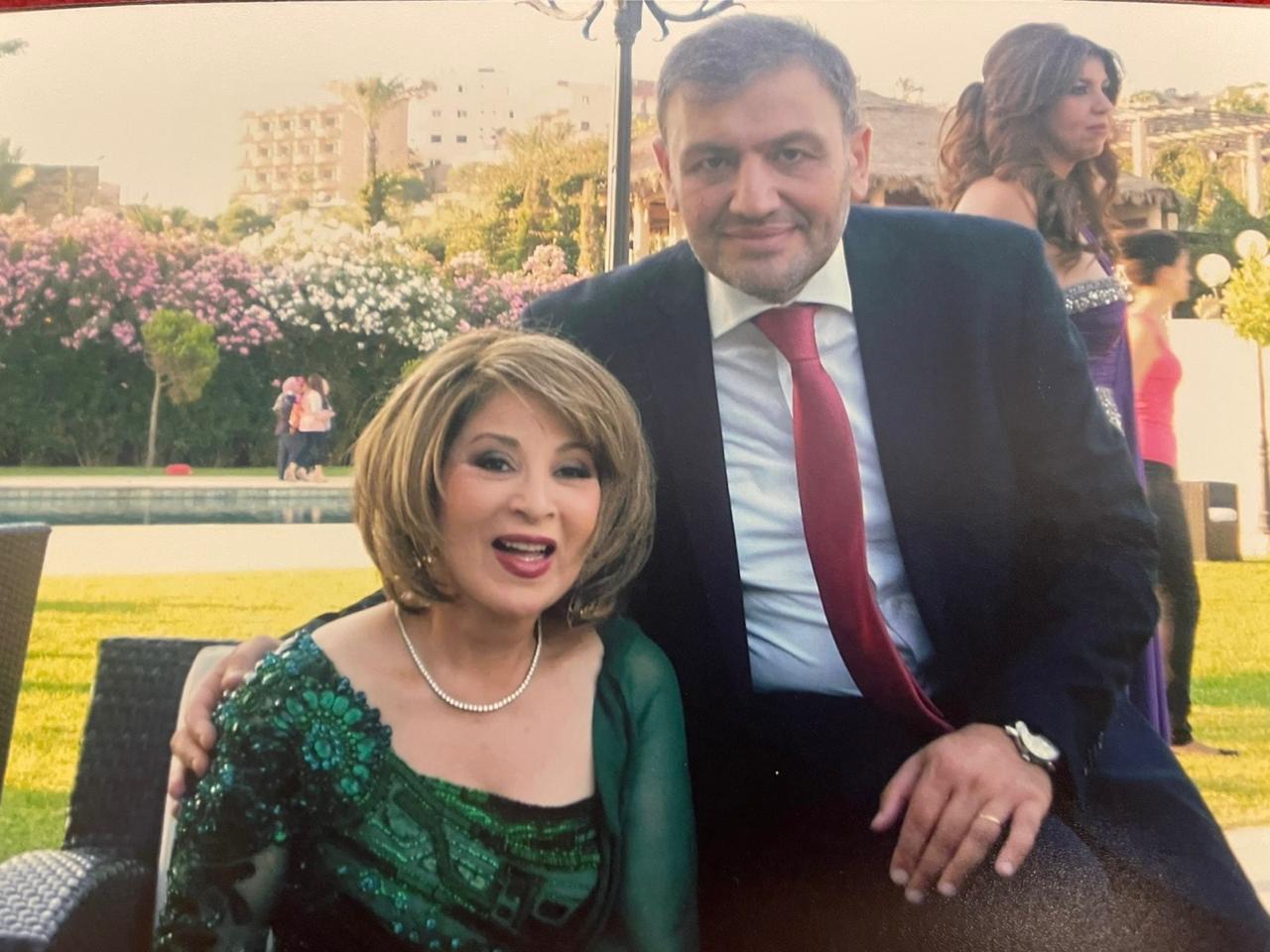
Without a doubt, it was my mother. She was passionate about reading, well-educated, and among the first in our region to obtain the brevet (diploma) in the early 60s. My mother, Olga, to whom I dedicated my first book, is the one who, until she closed her eyes, continued to read the books of saints, solve crosswords, and adore the theater from the black-and-white era. It was she who traced my path toward knowledge and the arts.
14. Have you reached your goal in life, or do you still have dreams to achieve?
I am not the type to be satisfied with what I have, and relaxation does not attract me. I have always preferred commas in sentences to final periods on the last lines. I have many small dreams I seek to realize. Every time I watch an episode of the show Yalla Nedbek, I wonder why I haven’t yet learned the Dabke, as I love the choreography. I might be waiting until retirement age to launch my own platform.
15. What advice would you give to young people who want to work in the media?
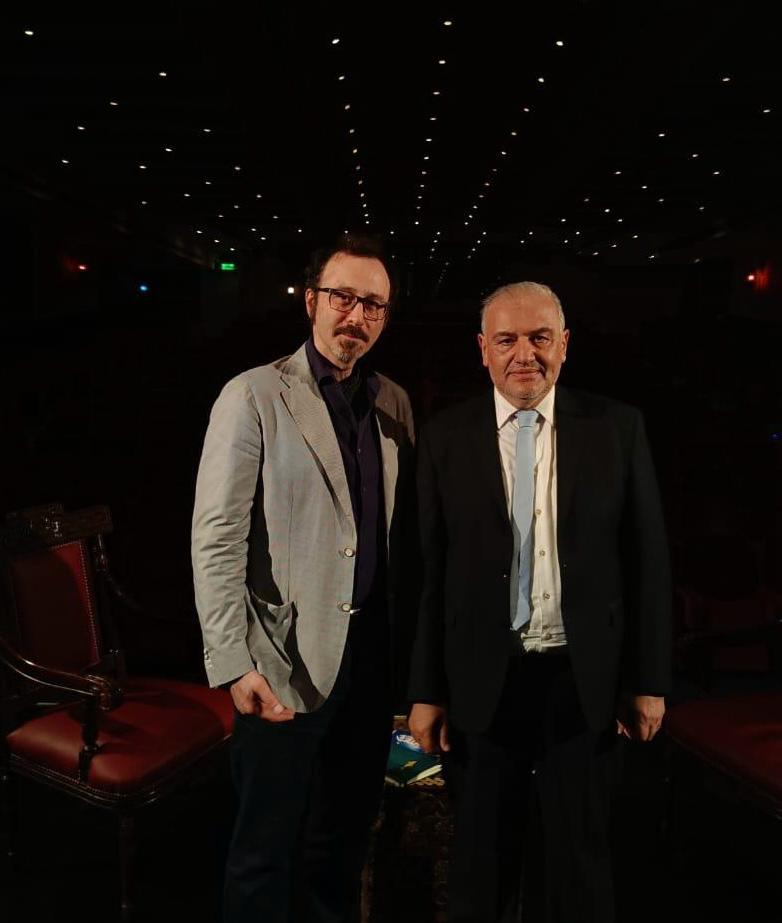
My advice for the new generation of graduates and students is reading and following the main news broadcasts. Media is not just a matter of physical appearance, politicized ideas, or partisan affiliations. You must take an interest in content and focus on diverse readings in different languages.
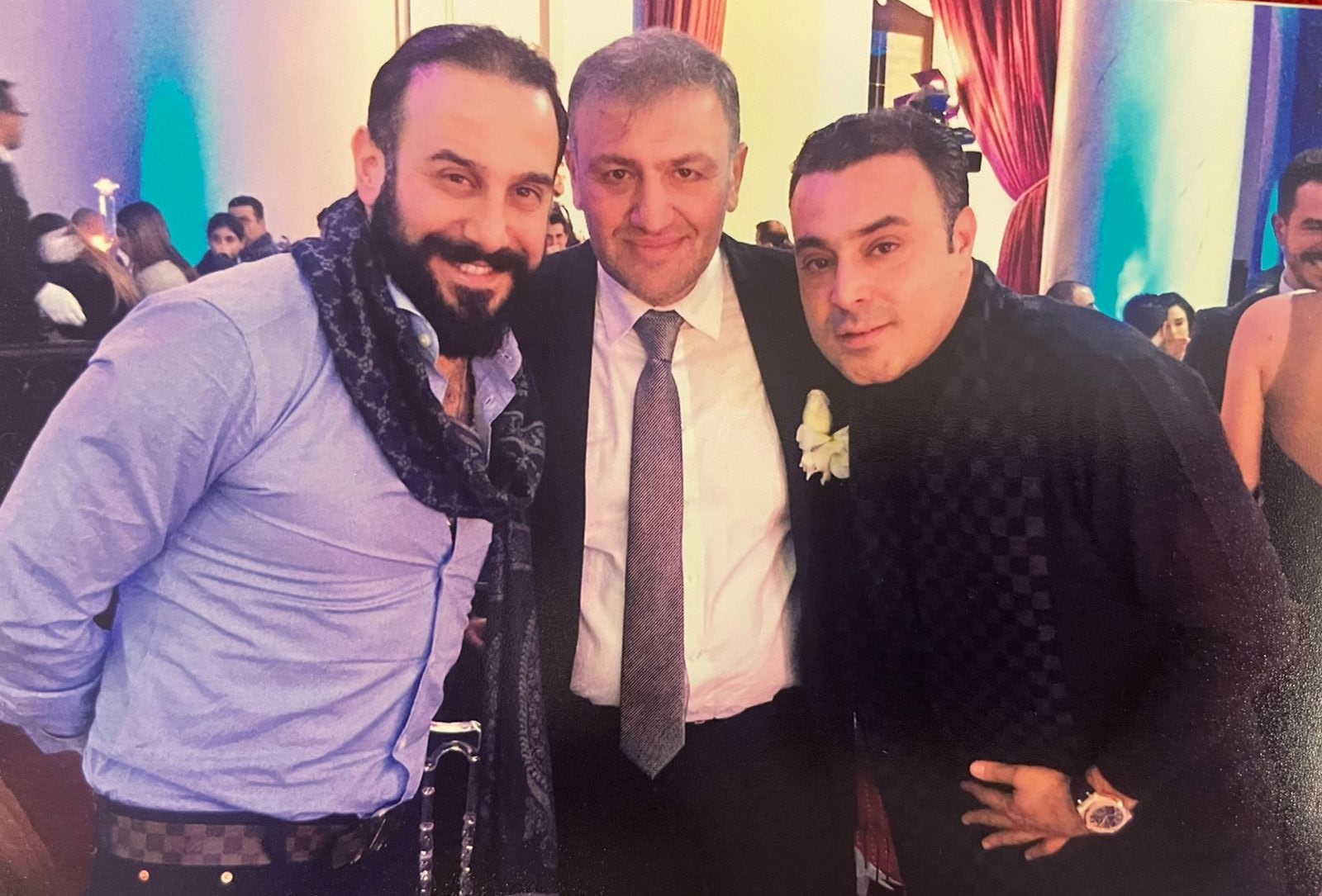
Robert Frangieh
Multimedia Journalist (Print, Radio, Television) – Private and Public Media
Professional Career & Expertise
An exceptional career: With 37 years of experience, he has conducted nearly 6,000 interviews across radio, television, and the written press (notably for Al-Chabaka and Al-Sayyad magazines, Al-Anwar newspaper, and various digital portals), meeting iconic figures from literature, the arts, and politics.
Host of the show “Dayf al-Dayf” on Sawt el Ghad for 26 years (broadcast on Saturdays).
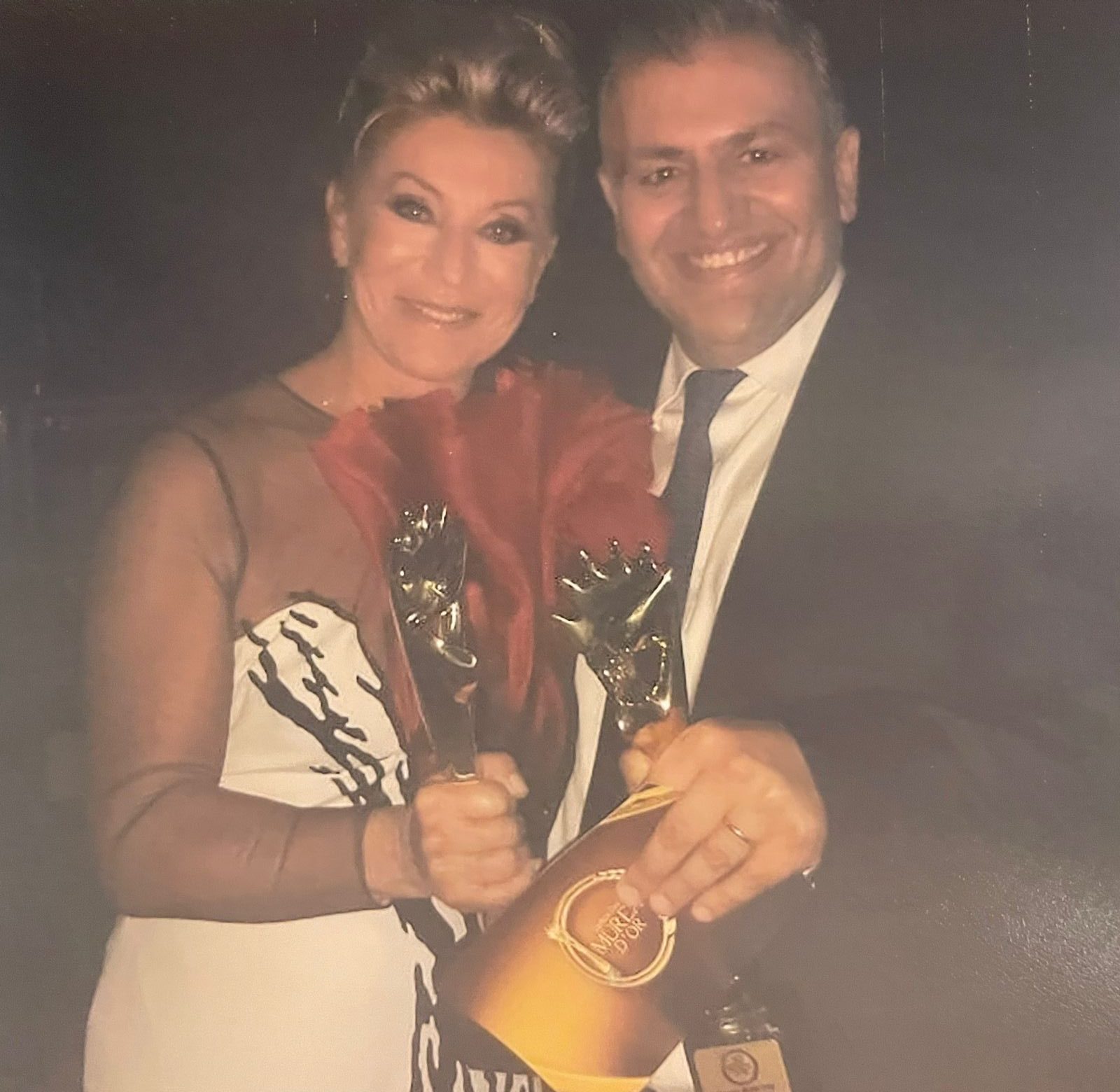
Producer and host of “Album al-Assala” on Télé Liban (3rd consecutive season, 100 episodes to date), a program for which he received the Prestige magazine trophy.
Stage Experience: Speaker and Master of Ceremonies for over 1,000 cultural, artistic, and environmental events throughout Lebanon.
Distinctions & Commitments
Titles and Awards:
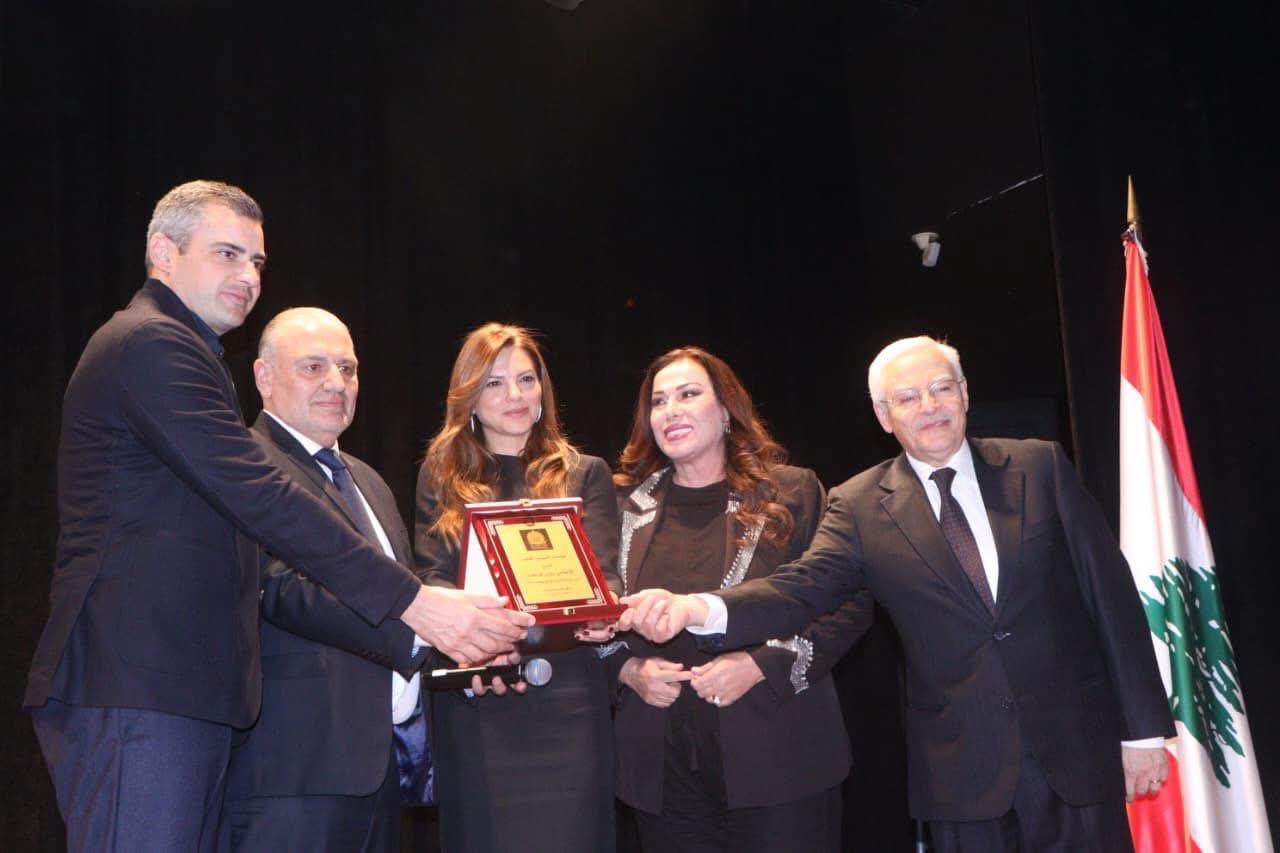
Named “Ambassador of Arab Media 2026” by the Sawsan International Foundation.
Recipient of the Paul Harris Fellow Award, the highest distinction of Rotary International.
George Ibrahim el-Khoury Prize and “Afkar Ightirabiya” Prize (Australia).
Named “Ambassador of Arab Media 2026” by the Sawsan International Foundation.
Affiliations: Member of the Producers Union and member of the Murex d’Or jury.
Media & Artistic Achievements
Television (Host): Khoud Khabaron men Neswanon, Microscope, Face et Profil.
Radio (37 years on air): Aswat, Al-Majalla al-Chamaliya, Bayna Mouzdawajayn, Mbareh Boukra, Chi Gharib.
Filmography & Consulting: Guest appearances in several series (Al-Ghaliboun, Indama Yabki al-Turab, Arous w Aris, Kinda, etc.) and dramatic consultant for various films and television productions.
Literary Publications
Author of several reference works and children’s literature:
Zaraani bi Ard Lebnan (On emigration).
Ghabet al-Chams (Study on the poet Assaad el-Sabaaly).
Chou Ismak (Dictionary of artistic pseudonyms)
Children’s Literature: Wael wal Awa’el and Jana al-Ghaba.
Personal Information
Married to Nouha Douaihy, he is the father of three children: Emilio, Ghadi, and Jana.